< Back
- Article
- Intimate care

Menstrual health and its importance: a basic guide
by Cumlaude Lab
Throughout history, menstruation has been regarded as a taboo, shrouded in stigma and misinformation. For years, people who menstruate have been unaware of their menstrual cycles or the basics of menstrual health and hygiene. Nowadays, the concept of menstrual health has gained prominence as a fundamental aspect of overall health. Learning more about the phases of the menstrual cycle and recommended intimate care is vital for experiencing each stage with a sense of well-being.
The menstrual cycle: let’s take a closer look!
The menstrual cycle is a highly complex and fundamental process in menstrual health, as it is when ovulation occurs and the body prepares for a possible pregnancy. It can vary considerably depending on the stage of life. Did you know that? Here’s how:
- During puberty, before the first period – also known as menarche – a series of physical changes occur that signal its arrival, demonstrating that the effects of menstruation impact both women and girls.
- During adolescence, the first menstrual cycles may be more irregular, and it is common for ovulation not to occur for a while.
- In adulthood, cycles lasting between 21 and 45 days between periods are considered within the normal range.
- After childbirth, if any, breastfeeding women may experience periods of amenorrhoea, that is, a lack of menstrual periods.
- Menopause is the final menstrual period. It occurs between the ages of 45 and 55, and is preceded by a transitional phase involving physical and emotional changes.
Stages of your menstrual cycle
Whatever stage of life you are at, here is a reminder of the phases of the menstrual cycle. It is important that you can recognise them easily to ensure you look after your menstrual health:
- Menstruation
Your period is the first phase of the menstrual cycle. During this phase, the ovaries, the womb and the brain work together to trigger menstruation and cause bleeding from the womb, also known as menstrual flow. Be careful! At this stage, poor feminine hygiene can create conditions for pathogenic microorganisms, such as Candida, to grow.
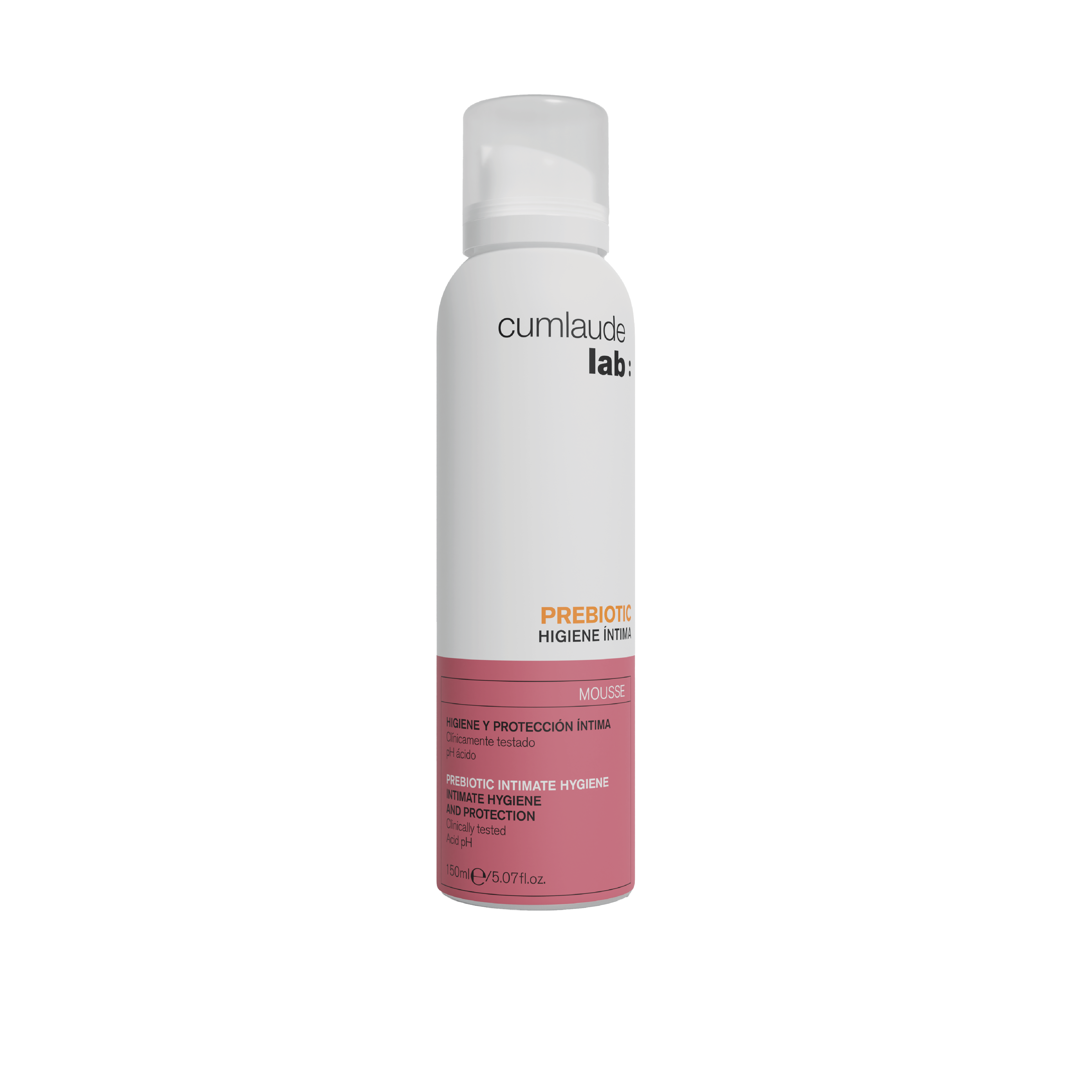
At this stage, and throughout the rest of the cycle, we recommend using menstrual products such as: Prebiotic Mousse Intimate Hygiene, to help keep your intimate area free from bacteria. You can also complement your routine with Prebiotic Vaginal Suppositories, which are recommended for the prevention of bacterial vaginosis and vaginitis. They could be one of your go-to products for menstrual hygiene!
We also recommend wearing period panties and period underwear – they’re very comfortable and hygienic!
- Follicular phase
Hello, oestrogen! After your period, levels of this hormone slowly rise. Your body prepares to release the egg, which is why your sex drive, serotonin and dopamine levels increase at this stage. This can cause vulvar and vaginal dryness, so you can use internal or external vaginal moisturisers.
Recovered and ready for another round: the body balances the vaginal microbiota, increasing blood flow and hydrating the tissues.
- Ovulation
The egg is released around the middle of the cycle, although this can vary in some cases. It remains waiting for a sperm to fertilise it for 24 hours. Tick, tock… If this doesn’t happen, the egg ages and can no longer be fertilised. Your body is ready for the possibility of pregnancy, so you may feel a little calmer and more introspective than in the previous stage.
During these days, you’re likely to experience increased vaginal lubrication, and you’ll certainly notice changes in your discharge throughout all the phases.
- Luteal phase
After ovulation has taken place and until your next period, the luteal phase occurs, during which the endometrium – the lining of the uterus – undergoes significant changes to prepare for a possible pregnancy. If pregnancy does not occur, it breaks down, triggering your next period. Interesting, isn’t it?
Now that you know all about menstrual cycles, you’ll be able to look after your menstrual health more effectively. Among other things, this will help you enjoy better sexual and reproductive health!
Be careful! Factors that disrupt your cycle and menstrual health
You should be aware of the factors that can disrupt the different stages of the menstrual cycle, so you can be on the lookout for anything out of the ordinary!
- Internal factors: endocrine disorders, gut microbiota, genetic, infectious, gynaecological, autoimmune or neuropsychiatric conditions, to name but a few.
- As for external factors, these can include dietary issues, poor-quality sleep, intense exercise, stress, poor working conditions, bereavement, or harassment at work, at school or on the street.
Now that you’ve refreshed your memory on the phases and the factors that affect your cycle, you should know that, whilst there is no single menstrual cycle that can be defined as ‘normal’, there are key criteria for menstrual bleeding patterns. These criteria will help you assess your menstrual health. Let us tell you about them!
- In terms of duration, your period should last between 24 and 38 days
- Menstrual cycles should be more or less regular, although they can vary
- Up to 8 days of bleeding are considered healthy
- Up to 80 ml of menstrual blood per cycle is acceptable
- There should be no bleeding between periods
- You may experience some discomfort or pain in the abdomen during your period, although it is not normal to have pain that interferes with your quality of life. The same applies to premenstrual symptoms!
Every month, your body carries out a huge and complex process. As a menstruating person, you have the right to know and access the information you need to look after your menstrual health. If you have any concerns or think something is out of the ordinary, see your trusted doctor!
References
Comfortably, Safely, and Without Shame: Defining Menstrual Hygiene Management as a Public Health Issue. Sommer, Hirsch, Nathanson, Parker. 2015. https://www.ncbi.nlm.nih.gov/pmc/articles/PMC4463372/
The menstrual cycle: a biological marker of general health in adolescents. Popat, Prodanov, Calis, Nelson. 2008. https://pubmed.ncbi.nlm.nih.gov/18574207/
American Congress of Obstetricians and Gynaecologists. 2018. https://www.acog.org/womens-health/faqs/dysmenorrhea-painful-periods
Cum Laude. Menstrual health. Find out about possible conditions affecting your intimate area during the different phases of the menstrual cycle.
Clue. (2019). What you need to know about hormones. https://helloclue.com/es/articulos/ciclo-a-z/lo-que-debes-saber-sobre-las-hormonas.
MedlinePlus. Menstruation. https://medlineplus.gov/spanish/menstruation.html
La Tribu School. (2022). Menstrual Health Guide. https://minmujeryeg.gob.cl/wp-content/uploads/2022/11/Guia-de-Salud-Menstrual-la-tribu.pdf
Recommended products
.webp)
If you found this helpful, you might be interested in reading:
Article

All about vaginal discharge
Vaginal discharge is usually clear or milky in colour and odourless. However, its colour or consistency may change throughout the menstrual cycle.

