< Back
- Article
- Intimate care

What is vaginal rejuvenation?
by Cumlaude Lab
There is increasing talk of vaginal rejuvenation, but we have many questions: what is it? What does it involve? What are the benefits? Let’s explore the topic from start to finish.
To begin with, we must be clear that genital rejuvenation encompasses two distinct yet complementary aspects:
- Cosmetic and functional surgery of the vulva and vagina.
- Treatments for genital atrophy.
Vaginal rejuvenation treatments
Vaginal gynaecological laser
Laser treatments – particularly radiofrequency or skin lightening of the external female genital areas – have seen growing demand amongst women in our country, whether due to sexual difficulties or simply for their own satisfaction with their appearance. There is no single standard; it is simply a matter of each woman feeling comfortable and satisfied.
Vulvovaginal surgery
Vulvo-vaginal surgery has made a significant impact in our country, just as breast cosmetic surgery did, establishing itself as a highly effective vaginal rejuvenation treatment, and its success is undeniable. It is all about respecting the decision and satisfaction of each individual woman.
Vulvovaginal atrophy: everything you need to know
When it comes to vulvovaginal atrophy, we almost always associate this type of consultation with the menopause; indeed, it is the stage of a woman’s life when it is most common, though not exclusive to it. This condition and/or the symptoms in the female genital area that usually accompany it can occur at any stage of a woman’s life (during pregnancy and the postnatal period, when wearing tight-fitting clothing, or as a result of hair removal, etc.).
The most common clinical manifestations of vulvovaginal atrophy are vaginal dryness and reduced lubrication, which can ultimately lead to symptoms in the vaginal area such as a burning sensation, stinging, itching and even pain in the vulva and/or vagina.
This whole range of symptoms in the vaginal area leads to a feeling of discomfort and a constant search for solutions, involving repeated visits to the doctor and treatments that sometimes do not solve the problem but instead perpetuate it over time. All of this can lead to anxiety, a reluctance to engage in sexual intercourse and even problems within the couple’s relationship.
Vulvovaginal atrophy is one of the most significant factors affecting sexual function and urogenital health, with a significant impact on quality of life. Its symptoms and consequences can become a major source of stress for women who experience and suffer from it, and may lead to depressive disorders.
Treatments for vulvovaginal atrophy
Pharmacological treatments have two aims: to restore the physiology of the genital epithelium and to relieve symptoms.
Non-hormonal treatments involve products that typically combine moisturising protective substances with agents that promote the maturation of the vulvovaginal epithelium. This type of treatment is particularly recommended for women who need to avoid hormonal treatments.
In this regard, we recommend the use of lubricants, moisturisers to aid hydration, and phytoestrogens (substances such as soya isoflavones and red clover). Furthermore, amongst non-hormonal treatments, we recommend:
- Vitamins: Studies have linked increased lubrication and improved vaginal epithelial health to vitamin E.
- Products containing hyaluronic acid, liposomes, hop extract and vitamin E: These are proving effective against vaginal symptoms, as they act synergistically to hydrate both the deep and superficial layers of the epithelium (hyaluronic acid), improve lubrication and the condition of the vaginal epithelium (vitamin E) or act as phytoestrogens (hops). Hyaluronic acid, the main component of the skin and mucous membranes, optimises their moisture balance and forms a non-adherent, permeable film that allows the vaginal mucosa to regenerate.
- Centella asiatica: It has also been shown to have a healing, regenerative, restorative and rejuvenating effect on the skin and mucous membranes.
- Growth factors (epidermal, insulin-like, fibroblast or vascular endothelial): These promote cell regeneration, collagen synthesis and fibroblast metabolism, resulting in increased dermal density.
- Essential vegetable oils (evening primrose, rosehip, argan, grape seed or soya): These are rich in linolenic acid (omega-3 and 6) and oleic acid (omega-9), which promote skin permeability and stability.
- Polysaccharides: Such as pullulan, which increases the skin’s smoothness.
- Niacinamide: To even out and brighten the skin tone.
Viderage, your ally for vaginal rejuvenation
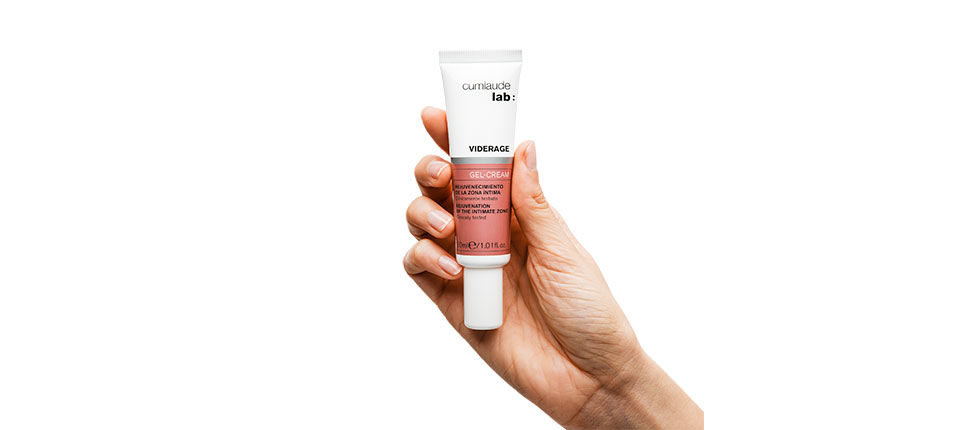
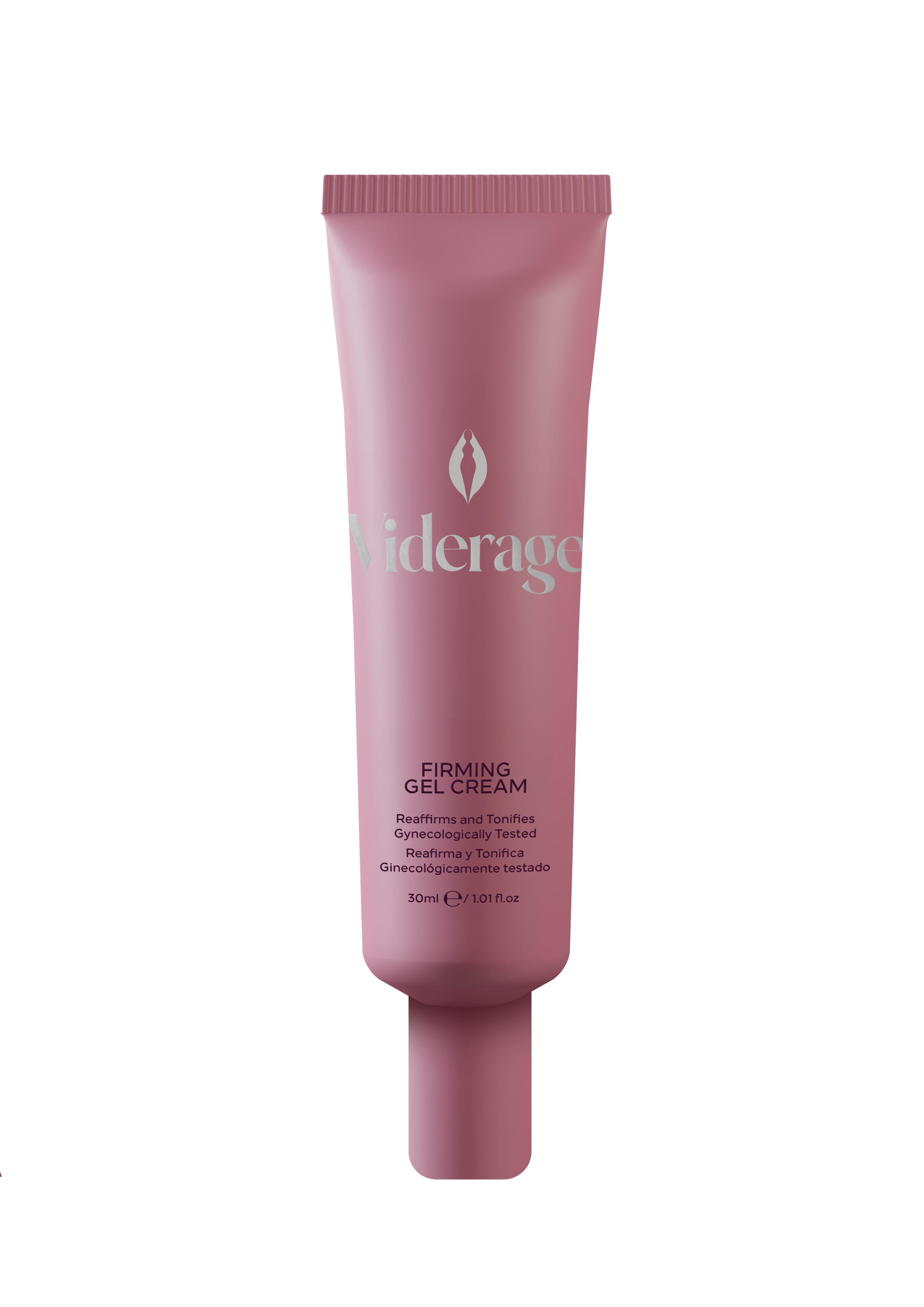
If you wish to combat vaginal ageing and loss of tone in the external genital area and the vulvo-perineal region, we recommend our Viderage cream gel. It is an ideal product for use during the menopause and post-partum, but also as an adjunct to post-surgical genital rejuvenation treatment. Thanks to its hyaluronic acid, peptides and niacinamide content, it has a noticeable toning and firming effect.
Recommended products
.webp)
.webp)