.webp)
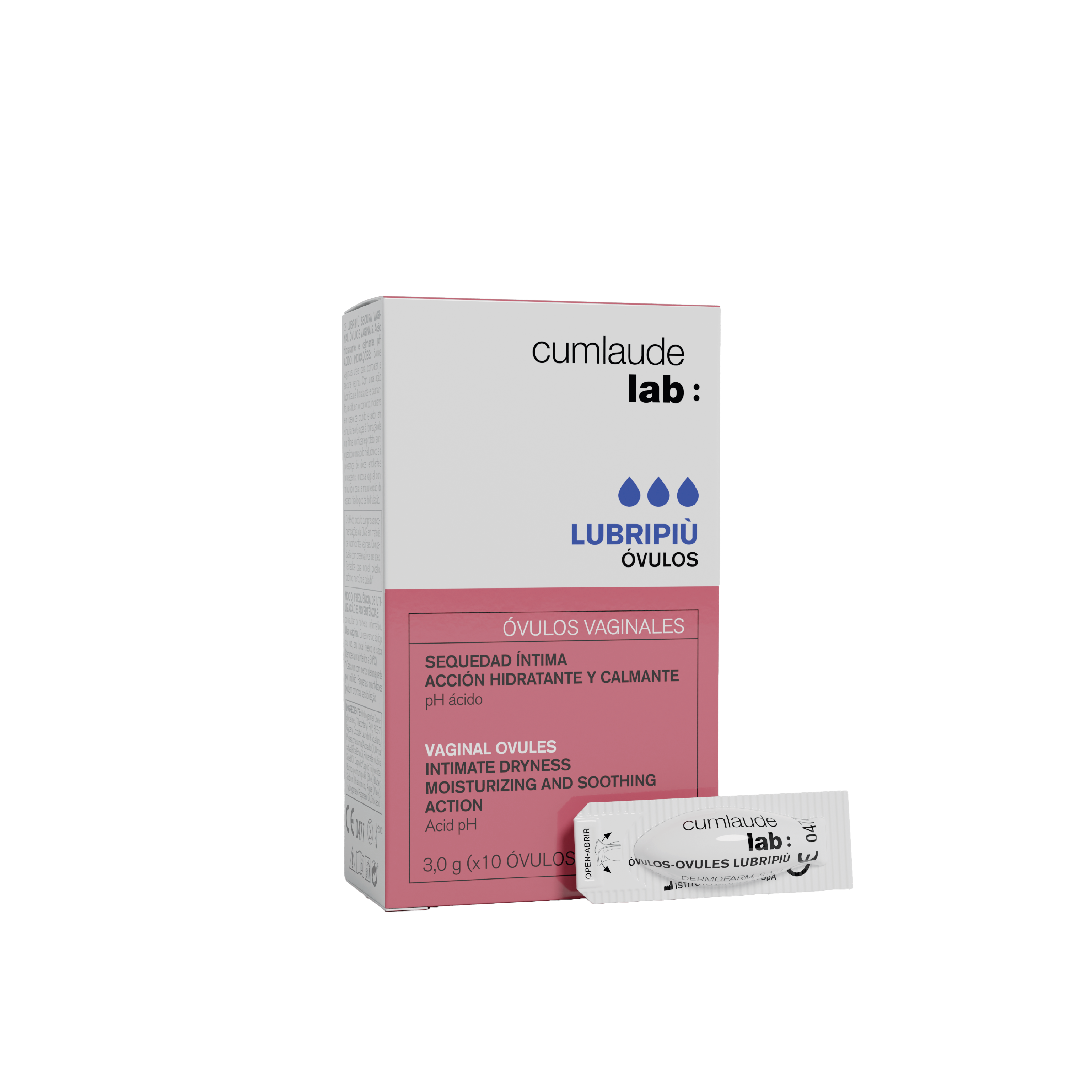
Lubripiù Óvulos
Vaginal ovules with lubricating, moisturising and soothing properties to combat vaginal dryness.

by Cumlaude Lab
It is important to bear in mind that vaginal dryness can occur in patients with gynaecological cancer as a result of treatments for the disease; we explain everything in this post.
Did you know that breast cancer accounts for 30 per cent of all cancers in women? Data from the Spanish Society of Medical Oncology for 2020 indicate that 1 in 8 women in Spain will develop breast cancer during their lifetime. This means that around 33,000 cases are diagnosed each year in our country.
However, there are other gynaecological cancers we need to be aware of, such as ovarian cancer, which accounts for 3 per cent of cancers in women and is on the rise, or endometrial cancer, with more than 6,900 cases diagnosed each year.
Women have a range of concerns once they have been diagnosed with and treated for cancer. There is concern regarding the physical impact and emotional after-effects that the disease or treatments such as radiotherapy or chemotherapy may cause. There is also concern about how cancer may affect their fertility and, finally, there is an impact on gynaecological health and their sex life, given that one of the effects of gynaecological cancer can be vaginal dryness, for example.
It is very important to promote gynaecological healthcare for cancer patients because we know that it will have a direct impact on their mood, self-esteem and quality of life.
Cancer treatments have significant side effects on the mucous membranes and, specifically, on the mucous membranes of the female reproductive system, leading to conditions such as vaginal dryness.
The cells most affected by the cytotoxic effect of chemotherapy are those that share characteristics with tumour cells, due to their rapid multiplication: such as those in the hair follicles, the bone marrow, the digestive tract and the female reproductive system. This means that the side effects of chemotherapy have a very significant impact on women’s intimate health.
Cancer treatments lead to a reduction in oestrogen levels. This decline has both physical and psychological consequences, as it causes vulvovaginal atrophy, also known as GMS (Genitourinary Menopausal Syndrome), which presents with the following symptoms:
If you are looking for solutions to help you manage all these symptoms, or if you are a healthcare professional wishing to support your cancer patients, we would like to share an Intim Care routine with you to enhance their wellbeing.
As part of your regular care routine, we recommend using Lubripiù vaginal suppositories every other day. They will help to combat vaginal dryness thanks to their lubricating, moisturising and soothing properties, as they contain hyaluronic acid and 96.6 per cent emollient oils that form a protective lubricating filmthat protects the vaginal mucosa and helps maintain the body’s natural moisture balance. Repeat the process every month.
Finally, to strengthen the vaginal microbiota as a preventative measure, we recommend using Prebiotic vaginal suppositories, taking one suppository a day for 10 days.
Now that you know all about how to combat vaginal dryness in patients with gynaecological cancer, we recommend that you consult your trusted gynaecologist if you are a patient and have any concerns.
.webp)

