< Back
- Article
- Intimate care

Say goodbye to water retention!
by Cumlaude Lab
It’s highly likely that if you’re reading this article, it’s because you too suffer from fluid retention. This retention can manifest itself in many different ways, depending on the underlying cause or the stage of life each of us is at.
Symptoms of fluid retention
You may feel bloated, with a general feeling of heaviness; you may notice that your clothes, shoes or rings feel tighter; that you’re putting on weight for no apparent reason; or that you’re urinating less frequently.
It is also sometimes common for the skin to appear shinier or smoother; you may even find that your joints lose some flexibility, particularly your wrists, ankles and fingers.
Causes of fluid retention
Whatever symptoms you experience as a result of this fluid retention, it is important to see your doctor so that they can carry out a thorough assessment of your condition. However, you should be aware that fluid retention can be caused by many different factors:
- Physiological hormonal changes, such as the menopause or the period before your period.
- Taking certain medicines.
- An unbalanced diet due to excessive salt intake, a lack of protein, insufficient water intake, etc.
- Lack of physical exercise.
- Stress or anxiety.
- Lack of sleep.
- High temperatures due to excessive heat.
Tips for combating fluid retention
To help you tackle fluid retention, we’ve put together a series of easy-to-follow tips that will make a huge difference to how you feel. Let’s get started!
- Follow a balanced diet. What does this tip involve? Basically, it means cutting down on salt. Try cooking without salt and adding just the right amount when you serve the dish if you feel it’s a bit bland. In addition, cutting down on dairy products, such as cheese and yoghurt, can also be very helpful, as they are high in sodium and therefore promote fluid retention.
- Walk for 30 minutes every day or do some form of physical activity daily to boost your circulation and get your kidneys working. A sedentary lifestyle is the enemy of fluid retention, so if you spend the day sitting down at work, it’s very important to find ways to get your body moving. It’s as simple as getting up every hour to take a walk round the office!
- Try to drink one and a half litres of water a day. If you find this difficult, drinking herbal teas can help make it more enjoyable.
- Try not to wear tight-fitting clothes that could restrict blood circulation. In particular, very tight jeans or compression tights.
- Follow a healthy lifestyle; in other words, avoid alcohol and tobacco, as these are harmful substances that can affect your body.
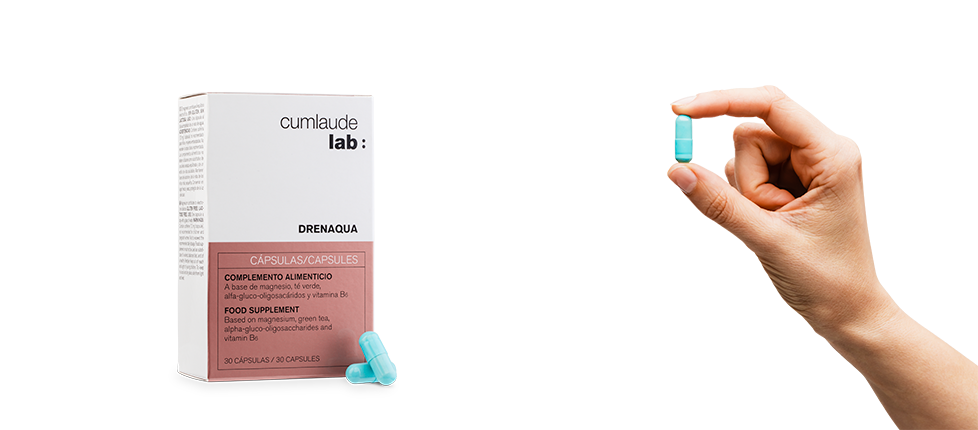
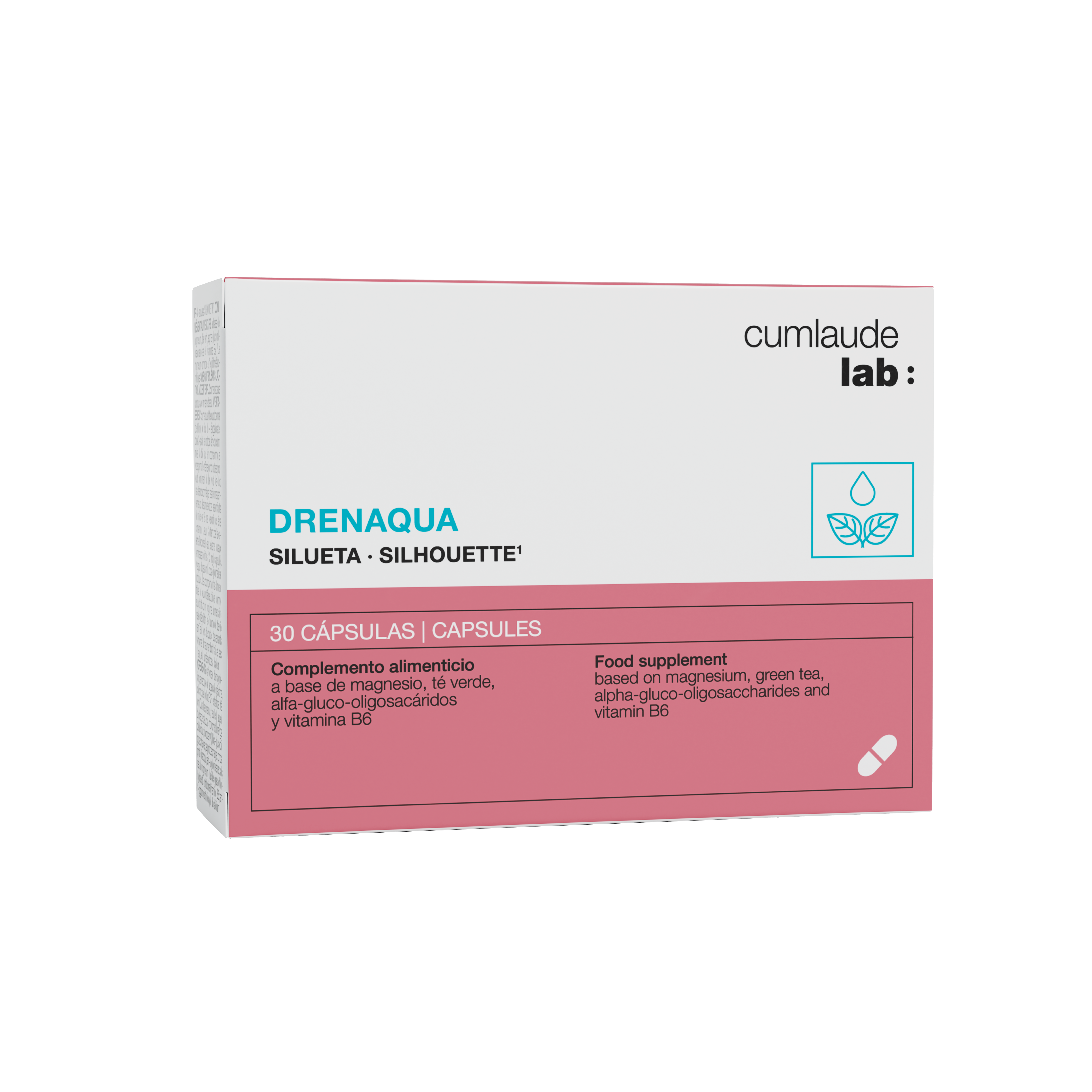
- Take dietary supplements to support your diet or during periods of physiological hormonal changes, to help maintain electrolyte balance. Here at Cumlaude Lab, we recommend taking Drenaqua Capsules daily for one month, as an efficacy study has shown that they are effective in significantly reducing weight and thigh and hip circumference after 4 weeks.
About Drenaqua Capsules
Drenaqua is a dietary supplement with a highly potent formula based on green tea, vitamin B6, magnesium and α-oligosaccharide prebiotics, which will help you promote the natural elimination of fluids, regulate hormonal imbalances, restore electrolyte balance, improve bowel function and reduce abdominal bloating.
Try it for a month by taking one capsule a day (preferably in the morning), drink 2 litres of water daily and follow a healthy diet… and let us know the results! But remember, food supplements should not be considered a substitute for a varied and balanced diet and a healthy lifestyle.
Recommended products
.webp)